"Should I push through it, or does this need looking at?" It's the question we hear most from people whose knee starts complaining halfway through a run, a squat session or a game of netball. The honest answer depends less on how much it hurts and more on how the pain behaves.
Most exercise related knee pain isn't dangerous, and plenty of it settles with smarter training. Some patterns, though, tell us a structure is struggling, and waiting those out usually makes recovery longer. Here's what's typically going on, how to manage it in the meantime, and the point where an assessment is worth booking.
Who Gets Knee Pain During Exercise, and What It Feels Like
We see it in every age group, but a few groups turn up again and again: runners who've recently added distance or hills, gym goers returning to squats and lunges after a break, teenagers in a growth spurt playing three sports a week, and people in their 40s and 50s getting back into fitness after years away.
The common thread is usually a change. A new program, new shoes, an extra training day, or a switch from the treadmill to the footpath. Knees tolerate a lot, but they adapt slowly, and they complain when the load rises faster than the tissues can keep up.
How it feels depends on what's driving it. The descriptions we hear most often:
A dull ache around or behind the kneecap, worse on stairs, when squatting, or after sitting with your knees bent through a long movie.
A sharp, pinpoint pain at the bottom edge of the kneecap when jumping or landing.
A burning pain on the outer side of the knee that arrives at a predictable point in a run, often forcing you to stop.
Catching, clicking with pain, or locking, sometimes with a sense the knee might give way.
Swelling that appears a few hours after training, followed by stiffness the next morning.
Timing matters as much as location. Pain that fades as you warm up behaves very differently from pain that builds the longer you go, and it's one of the first things we ask about.
What's Actually Going On
Your knee is essentially a hinge that relies on the hip above and the foot below to control it. So while the knee is where you feel the pain, it isn't always where the problem starts.
Patellofemoral Pain (Runner's Knee)
Patellofemoral pain is pain where the kneecap (patella) glides over the groove at the end of the thigh bone (femur). It's among the most common reasons active people come to see us. In most cases the joint surface is healthy; it has simply become sensitive to load.
Anything that presses the kneecap firmly into its groove tends to provoke it, such as deep squats, stairs and downhill running. Weak or easily fatigued hip and thigh muscles can change how the kneecap is controlled under load, which is why good treatment rarely focuses on the knee alone.
Patellar Tendinopathy (Jumper's Knee)
A tendinopathy is a tendon that has become painful and less able to handle load, usually because it was asked to do more than it was ready for. The patellar tendon, just below the kneecap, absorbs big forces every time you jump, land or change direction.
This is the classic example of the warm up pattern mentioned earlier, with the added sting of a flare the following day. That combination fools a lot of people into training through it for months. Tendons respond well to gradually increasing load but poorly to complete rest, so the plan usually means adjusting training rather than abandoning it.
Iliotibial Band Syndrome
The iliotibial band (ITB) is a thick strip of connective tissue running down the outside of the thigh to just below the knee. ITB syndrome causes sharp pain where the band crosses the knee, typically appearing at a similar distance on each run.
Foam rolling the band itself rarely solves it, because the band is far too strong to be meaningfully stretched or released. What usually helps is reducing compression on the outer knee through changes to training volume, better hip strength and control, and sometimes tweaks to running technique.
Meniscus and Ligament Injuries
The menisci are two crescent shaped cartilage cushions sitting between your thigh and shin bones. They can tear with a twist on a planted foot, or wear gradually with age. Ligaments such as the ACL (anterior cruciate ligament, a key stabiliser deep inside the knee) are usually injured with a sudden pivot, an awkward landing or a direct hit.
These injuries tend to have a clear moment of onset. Swelling within hours, locking, or the knee buckling are signs that something structural may be involved and needs proper assessment, not a training tweak.
Early Osteoarthritis
Osteoarthritis is a change in the joint where cartilage thins and the surrounding bone and tissues adapt. It becomes common from middle age, and the amount of change seen on imaging often doesn't match how much someone hurts.
A stubborn myth is that exercise wears knees out. A large review of running studies found recreational runners had lower rates of hip and knee osteoarthritis than people who didn't run, while years of high volume competitive running told a different story. For most people with arthritic knees, the right type and dose of exercise is part of the treatment, not the cause.
What It's Often Mistaken For
Several other conditions can pass for an exercise injury at first glance. These are the mix ups we see most often:
Hip problems. Hip joint conditions can be felt mainly in the knee, particularly in children, teenagers and older adults. A young person with knee pain and a limp should always have their hip checked.
The lower back. An irritated nerve in the lower back can cause aching, tingling or numbness around the knee and shin, with nothing wrong in the knee at all.
"Just tight muscles." Tightness gets blamed for nearly everything. Many knee problems are really about strength and tolerance to load, so stretching alone doesn't shift them.
Growing pains in active kids. Pain at the bony bump below the kneecap in growing children is often an irritated growth plate. It needs sensible load management, not necessarily time off all sport.
A meniscus tear found on a scan. In people over 40, a tear on an MRI isn't automatically the cause of the pain, as we explain in the scan section below.
Red Flags: When to Seek Urgent Medical Care
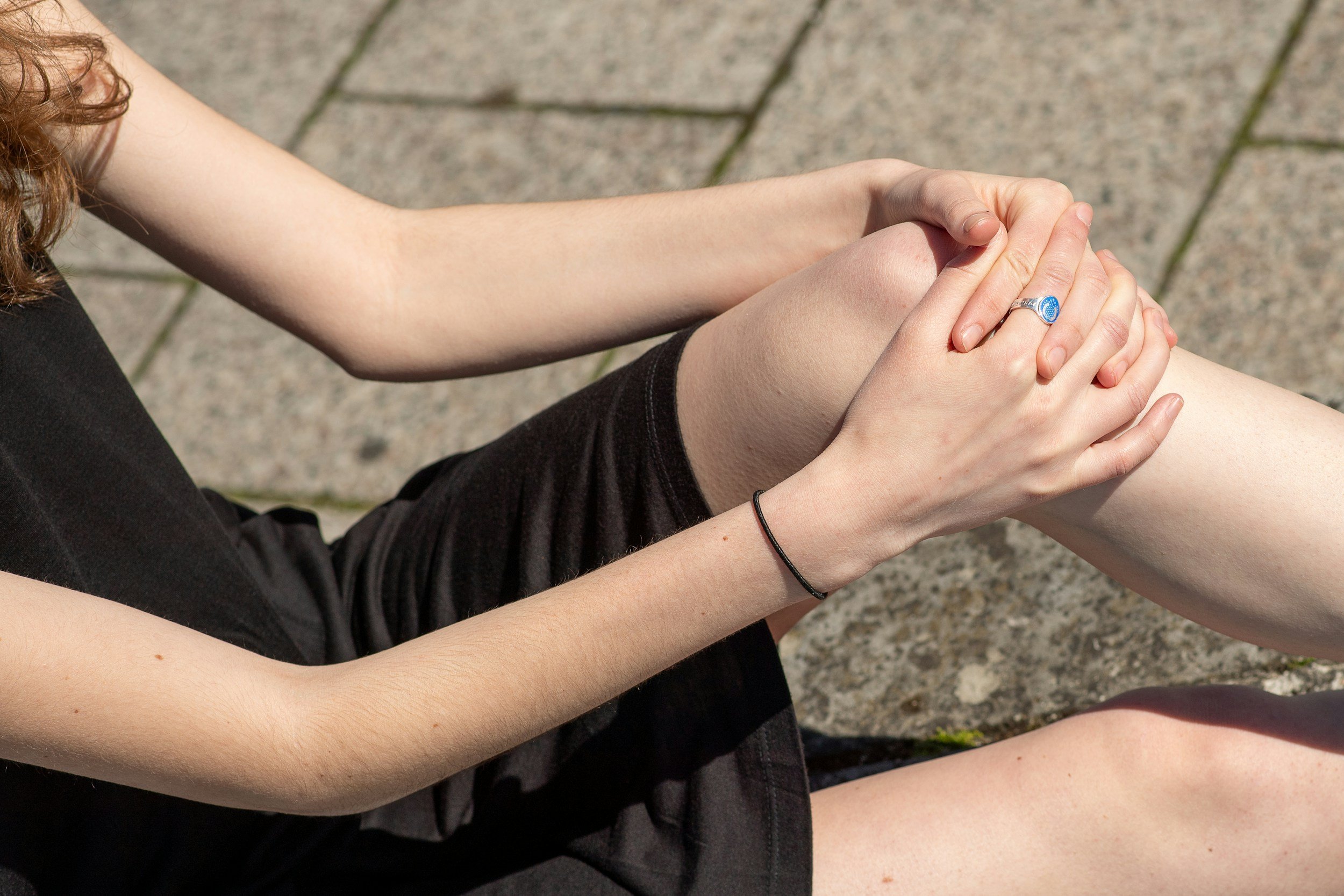
Some knee symptoms need a doctor or emergency department first, not a physio booking. Based on healthdirect's guidance on knee pain and standard clinical screening, seek urgent care if you notice:
Rapid swelling within an hour or two of a twist, pop or impact.
A knee that looks deformed or out of shape after an injury.
You can't put weight on the leg, or can't bend or straighten the knee.
A hot, red, swollen knee, especially with a fever or feeling generally unwell. This can signal a joint infection and is an emergency.
Calf pain, swelling and warmth, particularly after surgery, a long flight or a period of immobility, which can point to a blood clot.
New numbness, weakness, or a cold or pale lower leg.
Severe pain at night or at rest, alongside unexplained weight loss.
If any of these apply, see your GP urgently or go to your nearest emergency department, and call 000 in an emergency. If we pick up any of these signs during an assessment, we'll refer you on straight away.
What to Do in the Short Term
For pain that came on gradually with training and has none of the warning signs above, these steps usually help while you work out what's going on:
Scale back, don't stop entirely. Reduce whatever provokes it (distance, depth, speed, hills or jumping) to a level where pain stays mild during exercise and has settled by the next morning.
Use the next morning as your guide. If your knee is stiffer or sorer the day after, that session was too much. If it's no worse, you're in a reasonable range.
Keep your fitness ticking over. Cycling, swimming or upper body work often let you keep training without aggravating the knee.
For a fresh injury with swelling, relative rest, elevation and compression for the first couple of days. Ice can help with comfort.
Check the recent changes. Worn out shoes, a jump in training days or a new surface are common triggers and easy to fix.
Go easy on the painful spot. Aggressively rolling, massaging or stretching a sore tendon often irritates it further. Talk to your GP or pharmacist before relying on pain medication for more than a few days.
When It's Time to Book a Physio Appointment
Book an assessment if these sound familiar:
The pain hasn't clearly improved after a week or two of sensible changes.
It's changing how you move, such as limping, taking stairs one at a time or favouring one leg.
It keeps coming back every time you build back up to your usual training.
Your knee swells after sessions, or catches and clicks painfully.
You had a definite moment of injury, like a twist or pop, even if it has since settled.
You have an event, race or season coming up. Earlier assessment gives you far more options than a week out.
Seeing someone early rarely means a long treatment plan. Often it's one or two sessions to confirm the cause and set up a plan you can mostly run yourself.
How We Treat It
The Initial Assessment
We start with your story: when it began, what changed in your training, what aggravates it, and how it behaves across a day. Then we watch how you move, including squatting, single leg control, stepping down and, where relevant, running or lifting technique.
We test strength through the hip, thigh and calf, check the ligaments and menisci with specific clinical tests, and screen the hip and lower back. Where it adds useful information, our biomechanical assessment uses 3D movement tracking to measure how you move rather than relying on eyesight alone. You'll leave with a clear explanation of what we think is driving the pain, and whether you need a referral for imaging or a medical opinion.
Hands On Treatment
Treatment in the room may include soft tissue work, joint mobilisation, dry needling or taping, depending on what we find. Our team includes physiotherapists, myotherapists and chiropractors, so we can match the approach to the problem.
Here's the caveat we're upfront about. For patellofemoral pain, an international consensus statement found the strongest support for exercise therapy, particularly combining hip and knee strengthening, and recommended against relying on joint mobilisation by itself. Hands on care is useful for easing pain and making exercise more comfortable, but the strengthening work is what changes the outcome.
The exercise side of rehab is tailored to you, but it usually draws on a few categories: progressive strengthening for the hips, thighs and calves; specific loading for irritated tendons; landing and change of direction control; and a graded return to running, jumping or heavy lifting.
A Realistic Recovery Timeline
Every knee is different, but for the common overuse problems covered above, recovery tends to follow these phases:
Weeks 1 to 2: Settle and modify. Calm the symptoms, find a level of activity your knee tolerates, and start foundation strength work.
Weeks 3 to 6: Build capacity. Strength work progresses and more demanding movements come back in as symptoms allow. Most people notice a clear improvement here.
Weeks 6 to 12: Return to full training. A structured return to your sport, with load increased step by step and your knee's response monitored.
Longer cases: Tendon problems and pain that has lingered for many months can take three to six months or more. Rehab after ACL reconstruction is a different journey again, commonly nine months or longer before a return to pivoting sport.
Do You Need a Scan or Surgery?
Usually not, at least at first. Most of the problems covered here can be diagnosed from a thorough history and physical examination, and a scan rarely changes the initial plan.
Scans can also mislead. A well known study of MRI findings found meniscus changes were common in the general population of middle aged and older adults, including many people with no knee pain. Finding a tear doesn't prove it's the problem.
Imaging becomes worthwhile when a fracture is suspected, when there are signs of a significant ligament or meniscus injury such as locking or repeated giving way, when red flags are present, or when pain isn't improving despite well structured rehab. Surgery has a clear role for some injuries, such as certain ACL ruptures or a meniscus tear that physically locks the knee. For degenerative knee pain, though, arthroscopic "clean out" surgery is no longer recommended in current guidelines, and exercise based care is the first line approach.
Keeping Your Knees Happy for the Long Run
The habits that prevent knee pain are the same ones that stop it returning:
Change one thing at a time. New shoes, a new program and extra sessions all in the same fortnight is a classic recipe for a flare.
Keep strength work in your week, even when you're feeling good. Strong legs and hips share the load the knee would otherwise carry.
Plan lighter weeks into your training, rather than waiting for your body to force one on you.
Treat recurring niggles as information. Pain that turns up at the same point in every block is telling you something about load or capacity.
Knee pain while exercising is common and, in most cases, very treatable. It usually reflects a mismatch that won't correct itself while you keep training the same way, so understanding the cause early saves you weeks of stopping and starting.
If knee pain is changing how you train, book an assessment with our team at A Plus Physio in Rochedale. We'll work out the cause and build a plan that keeps you moving. You can also read more about what a sports physio does for knee and joint injuries, or browse the other conditions we treat.
FAQ
Should I keep exercising with knee pain?
Often, yes, in a modified form. Aim for activity where pain stays mild and has settled by the next morning. Stop and seek care if you have swelling, locking, giving way or any of the red flags above.
Is clicking in my knee a problem?
Painless clicking is very common and usually harmless. Clicking that comes with pain, swelling, catching or locking is worth having assessed.
Do I need a GP referral to see a physio?
No. You can book directly with a physiotherapist in Australia. A GP referral is only needed if you're using a Medicare chronic condition plan or a similar scheme.
How long does exercise related knee pain take to settle?
Many overuse problems improve noticeably within six weeks of the right rehab and return to full training within about three months. Tendon problems and long standing pain can take longer.
Will a knee brace or strapping fix it?
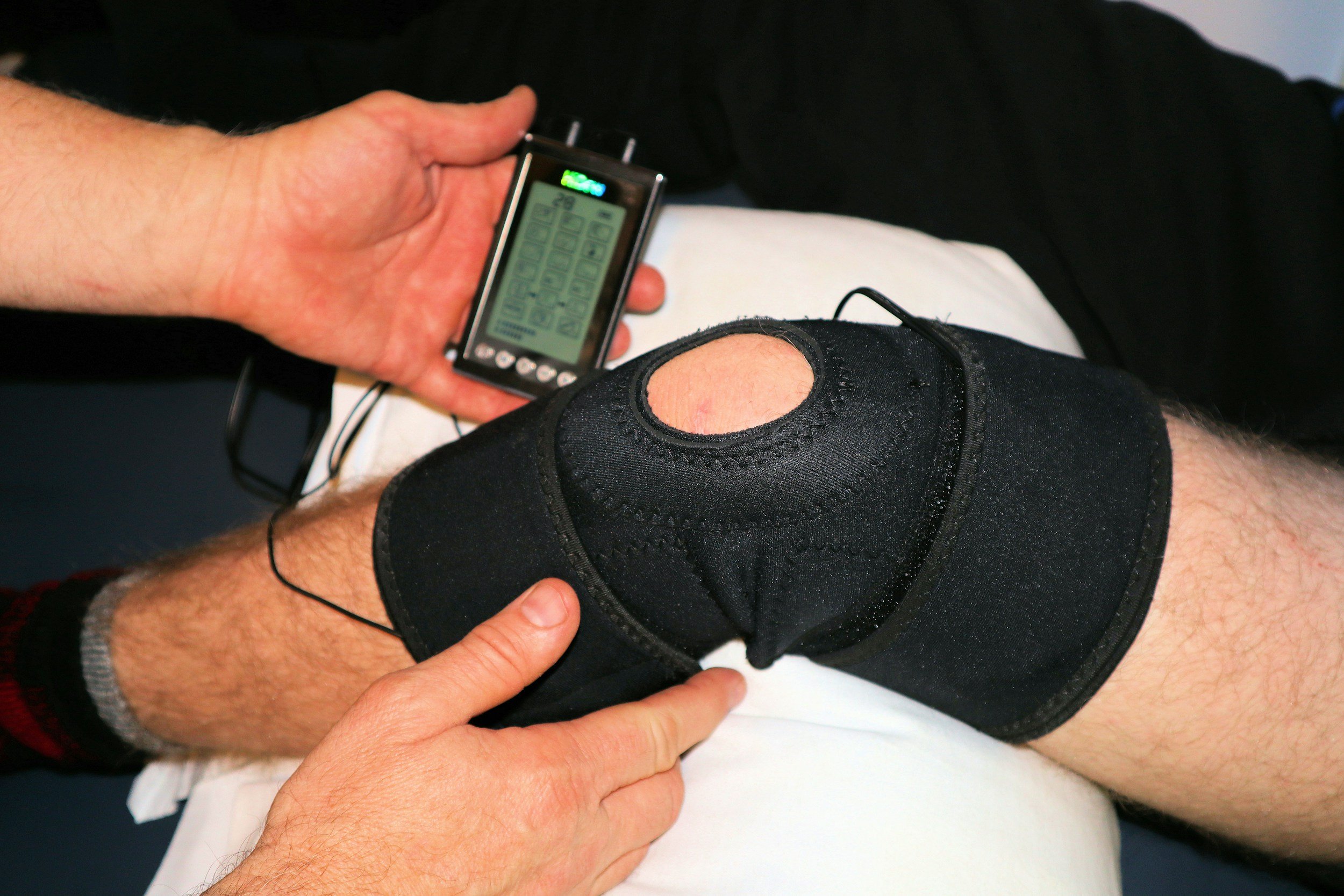
Taping and bracing can reduce pain for some people in the short term, but they don't build strength or tolerance. We use them as support while the rehab does its job.
Should I get an MRI?
Most people don't need one to start treatment. A scan is worth considering if a significant injury is suspected, red flags are present, or you aren't improving with good rehab.
Should I see a physio, myotherapist or chiropractor?
All three see knee pain. If you're unsure, start with a physio assessment and we'll guide you to the right mix of care within our team.