
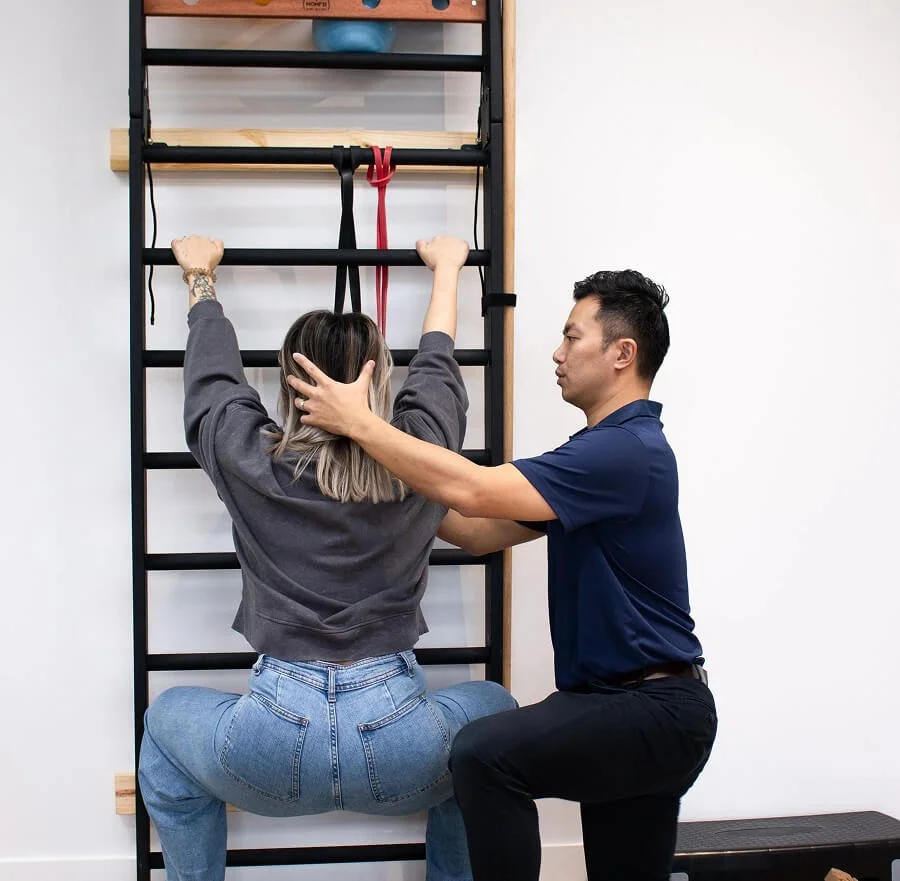
The Schroth Method: Scoliosis Specific Exercise Therapy
Exercises prescribed to your curve, not a generic core routine. Non-surgical scoliosis care for children, teens and adults.
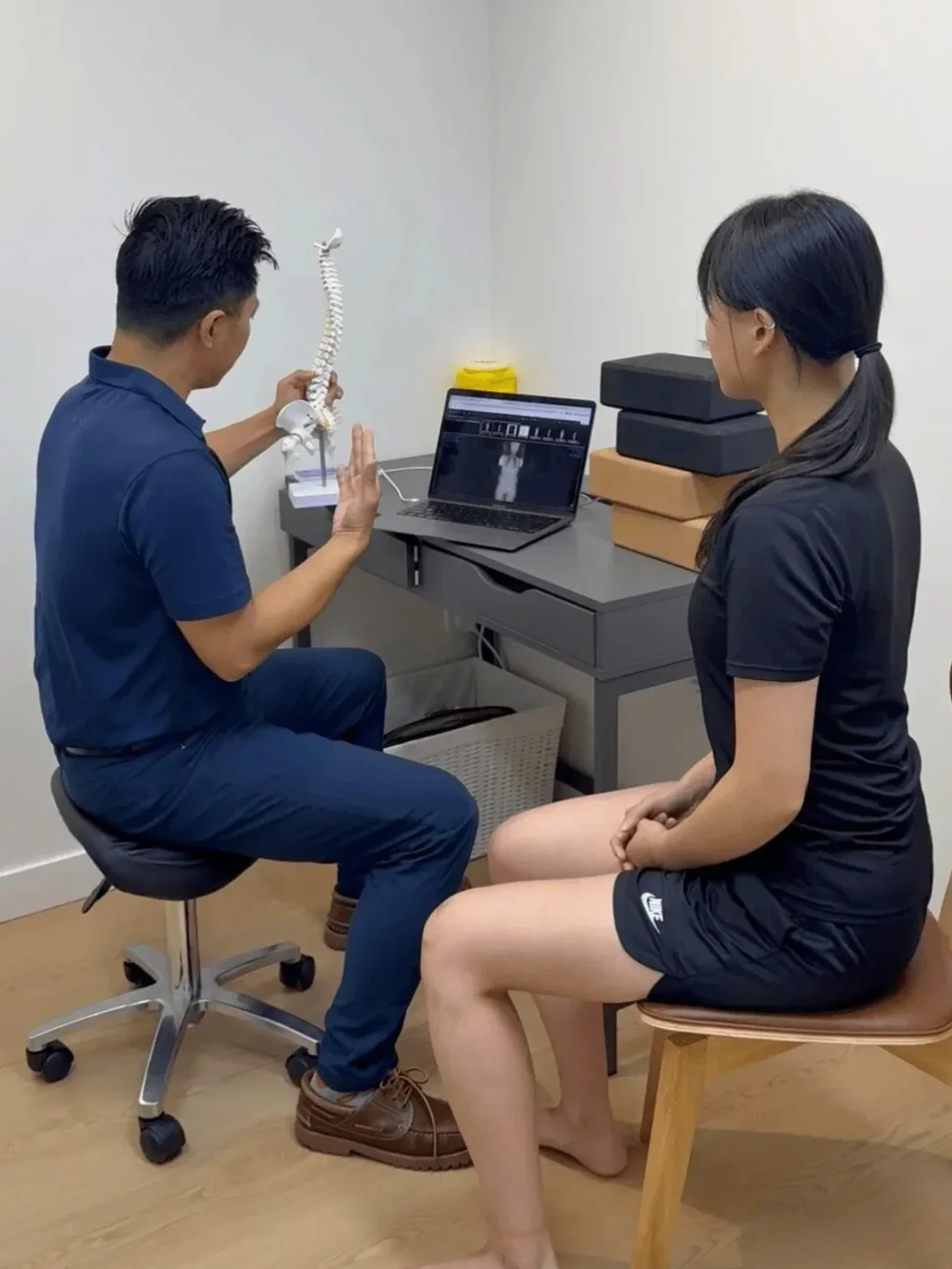
Your spine isn't symmetrical. Your exercises shouldn't be either.
Most back exercise programs are built for a body that's the same on both sides. Ten reps left, ten reps right, done.
Scoliosis doesn't work like that. The spine curves sideways and rotates at the same time, so one side of your back sits short and compressed while the other sits stretched and weak. Train both sides identically and you can end up reinforcing the exact pattern you're trying to change.
The Schroth Method takes the opposite approach. Every exercise is prescribed to your specific curve, using position, breathing and muscle activation to work against the curve rather than around it.
Prescribed to your unique curve pattern
Non-surgical and non-invasive
Suitable for children, teens and adults
Works alongside bracing and specialist care
What the Schroth Method Does
-
Scoliosis compresses the spine as it curves.
Every Schroth exercise starts from an actively lengthened position, creating space between the vertebrae before any correction is attempted.
Get this wrong and nothing else in the program works.
-
Scoliosis is three dimensional. The spine doesn't just bend sideways, it twists, and the ribs twist with it.
Schroth uses specific positions and muscle activation to unwind that rotation rather than ignore it.
-
This is the part that makes Schroth different from every other exercise approach.
Rotational angular breathing teaches you to direct your breath into the flattened, concave side of your ribcage, expanding it from the inside while you hold the corrected position.
-
A corrected posture you can't hold is a party trick. The final stage builds the strength and endurance in your postural muscles to keep the correction under load, in a chair, at a desk, on a field, without thinking about it.
-
A parent who's just been told their child has a curve and "we'll monitor it".
A teenager in a brace who wants to do more than wait. An adult who's had scoliosis for years and is now dealing with pain, stiffness or fatigue. Someone who's been told surgery is the only option and wants to explore what else is on the table first.
What happens in our Schroth program
-
![]()
We Assess
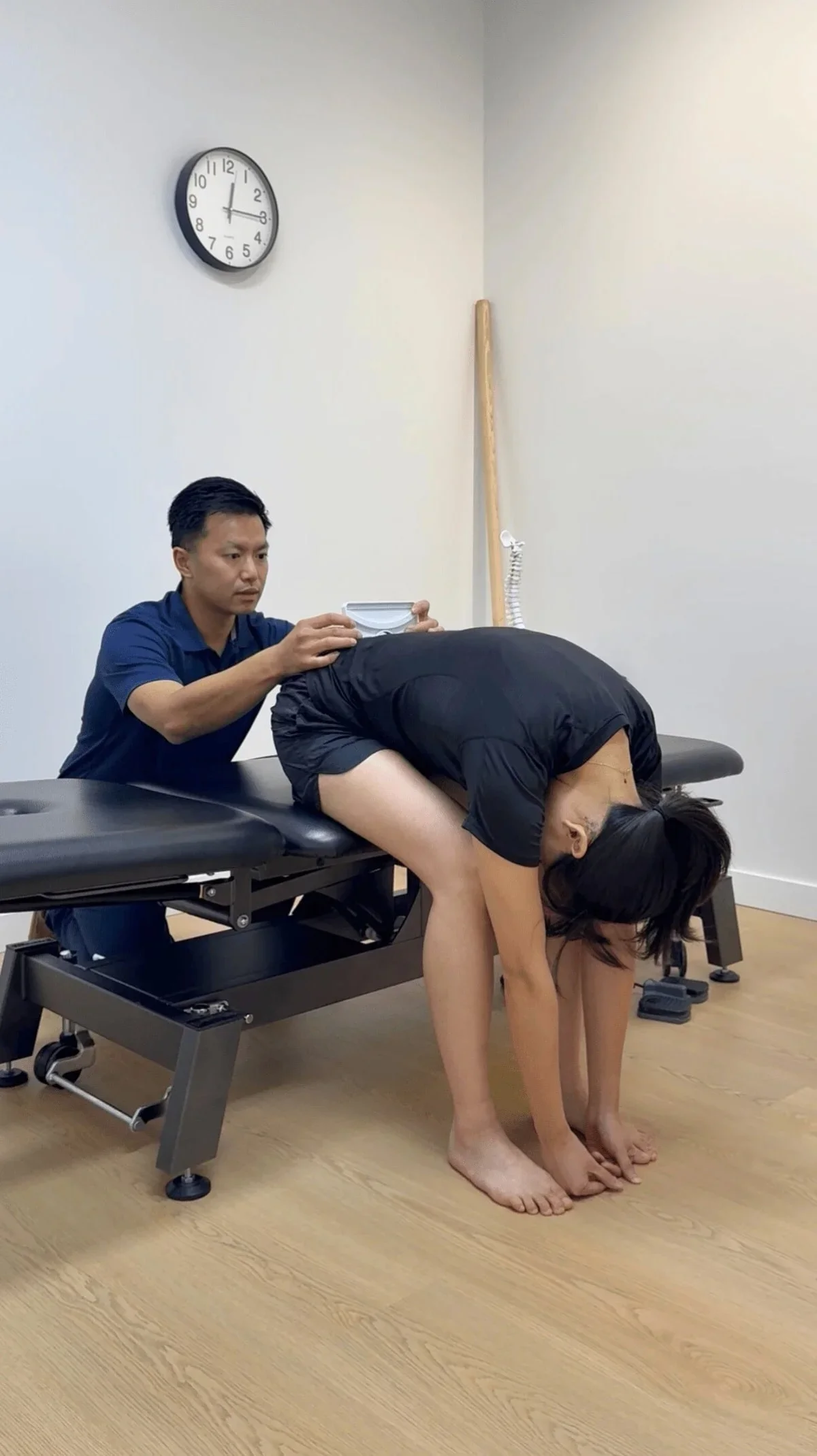
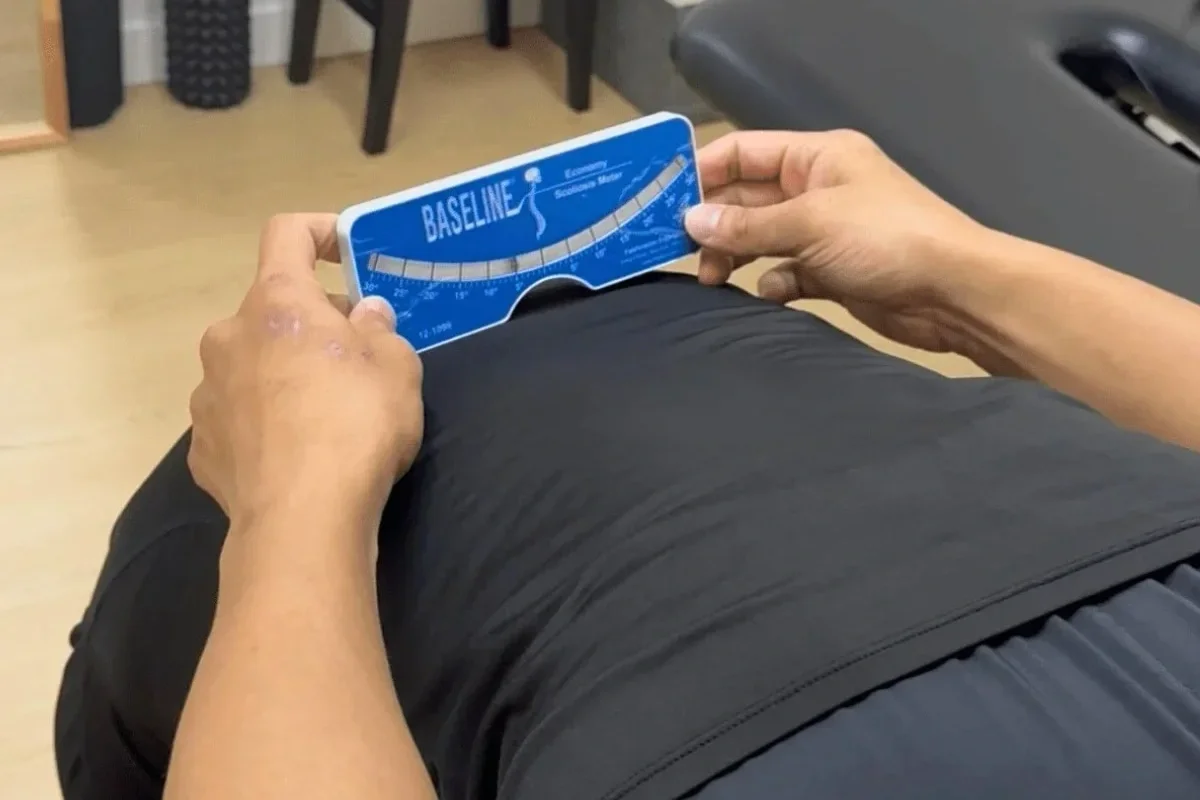
We measure your posture, movement and breathing, and we look at your imaging. Bring your most recent X-ray or report if you have one. If you don't, we'll tell you whether you need one and who to see.
-
![Close-up of a person receiving an acupuncture treatment with a fine needle being inserted into their skin.]()
We Classify Your Curve
Scoliosis comes in patterns. Where the curve sits, how many there are, how the ribs have rotated. Your practitioner classifies yours, because the exercises you get depend entirely on this step.
-
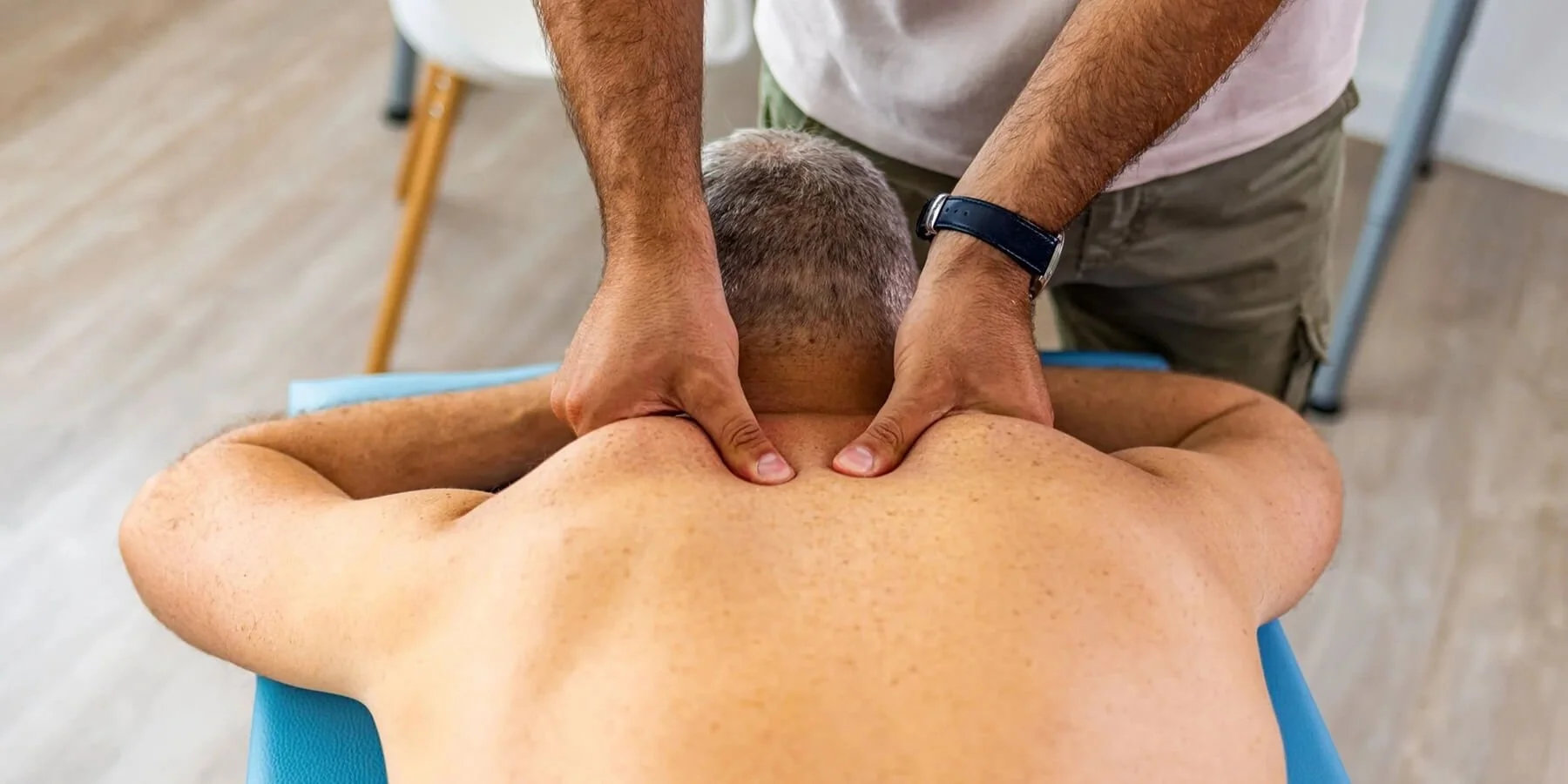
![A person receiving a chiropractic adjustment or massage on their upper back by a practitioner.]()
You Learn The Exercises
One on one, in front of a mirror, with hands-on cueing. Schroth exercises are precise and they feel strange at first. You don't leave until you can feel the difference between the corrected position and your normal one.
-
![Person stretching with resistance band in a gym.]()
You Take It Home
The clinic work is the smaller half. You leave with a home program built for your curve, and we review and progress it as you get stronger and your body changes.
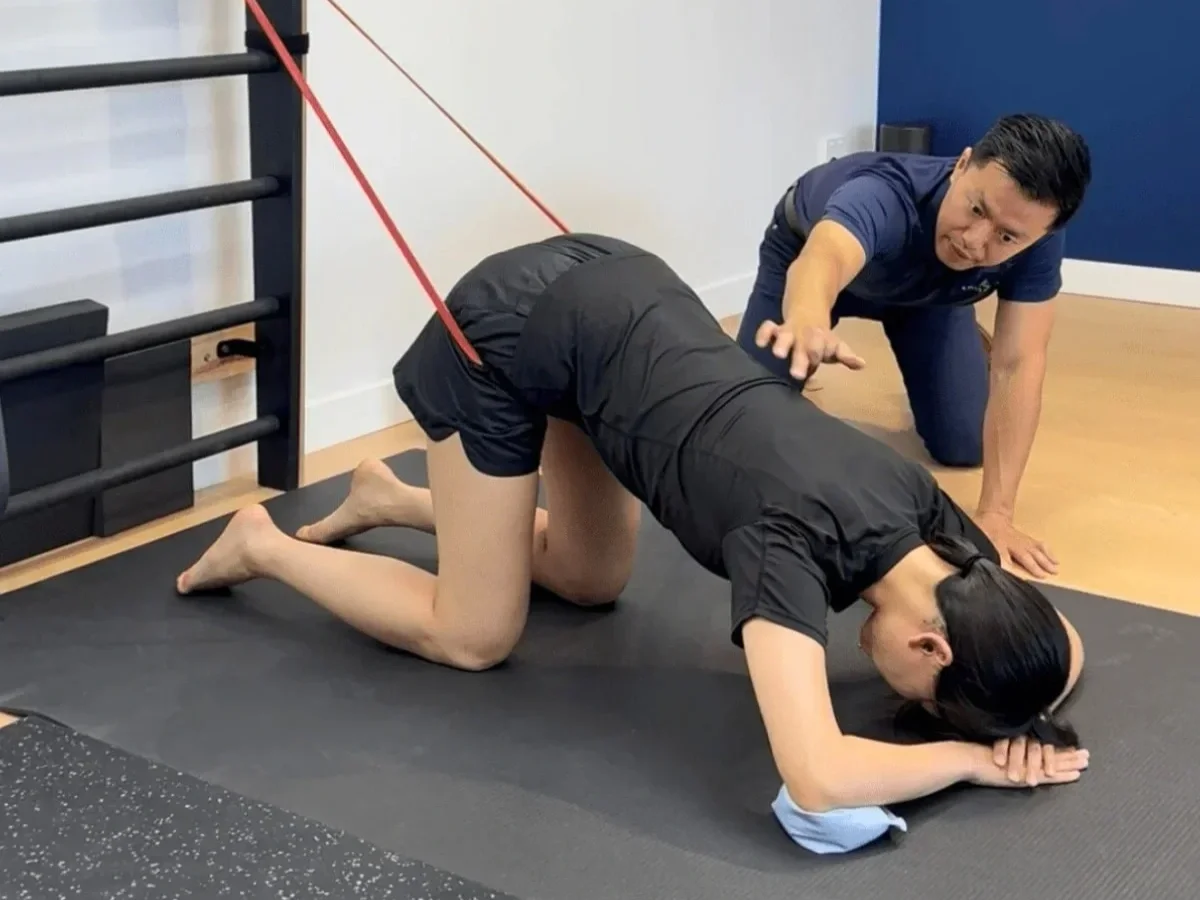
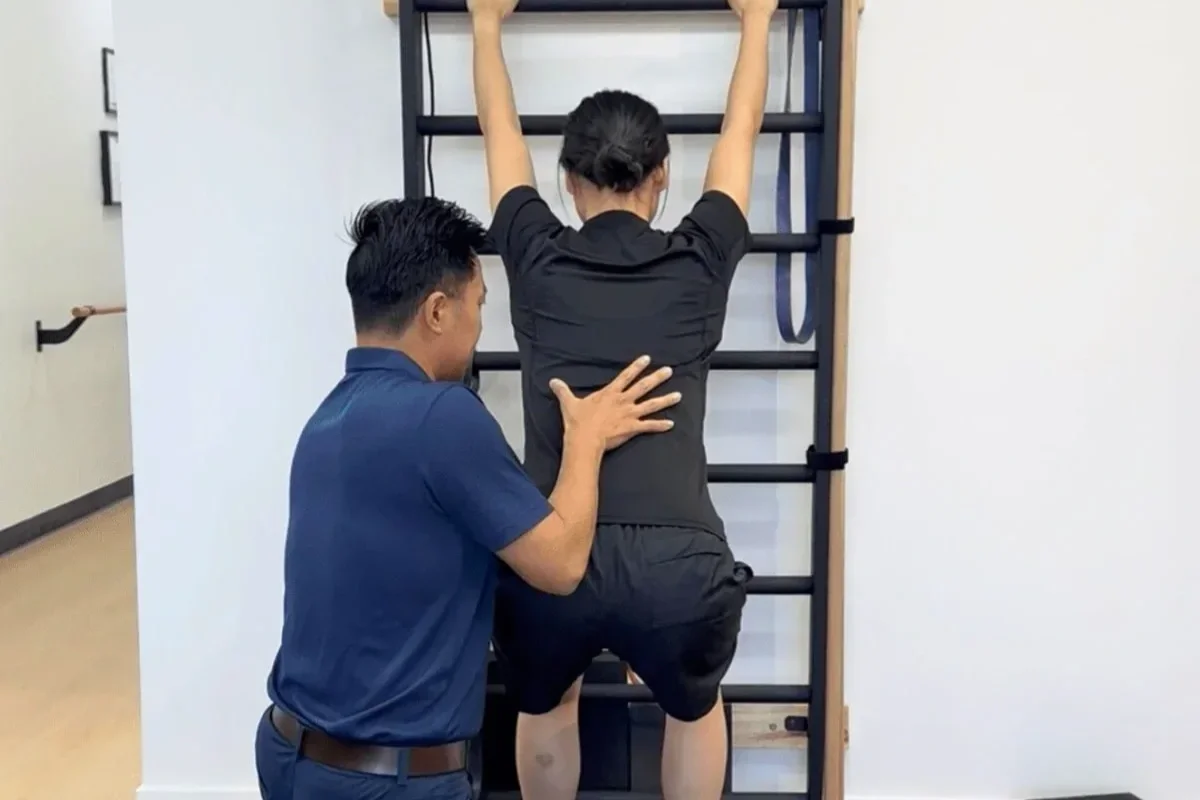
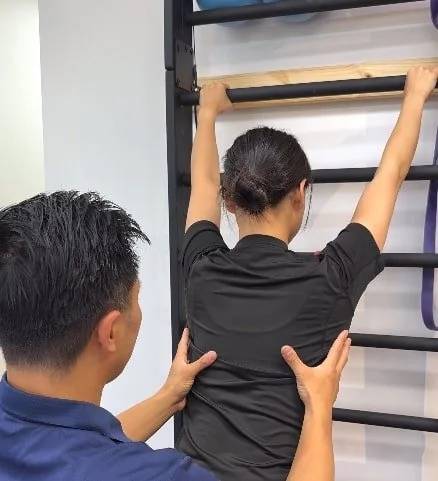
Not every physiotherapist or chiropractor can teach this.
Schroth is not a weekend course. It's a distinct, formally certified qualification, and most physiotherapists in Brisbane don't hold it.
Austin Tsai is a certified BSPTS practitioner, trained through the Barcelona Scoliosis Physical Therapy School in the Rigo Concept, a Schroth-based approach to scoliosis exercise therapy.
Since 2018, Austin has focused his practice almost entirely on spinal disorders, with scoliosis as the core of it. He's an Associate Lecturer at the University of Queensland and a regular speaker at international medical conferences and national courses.
Ready to correct your curve?
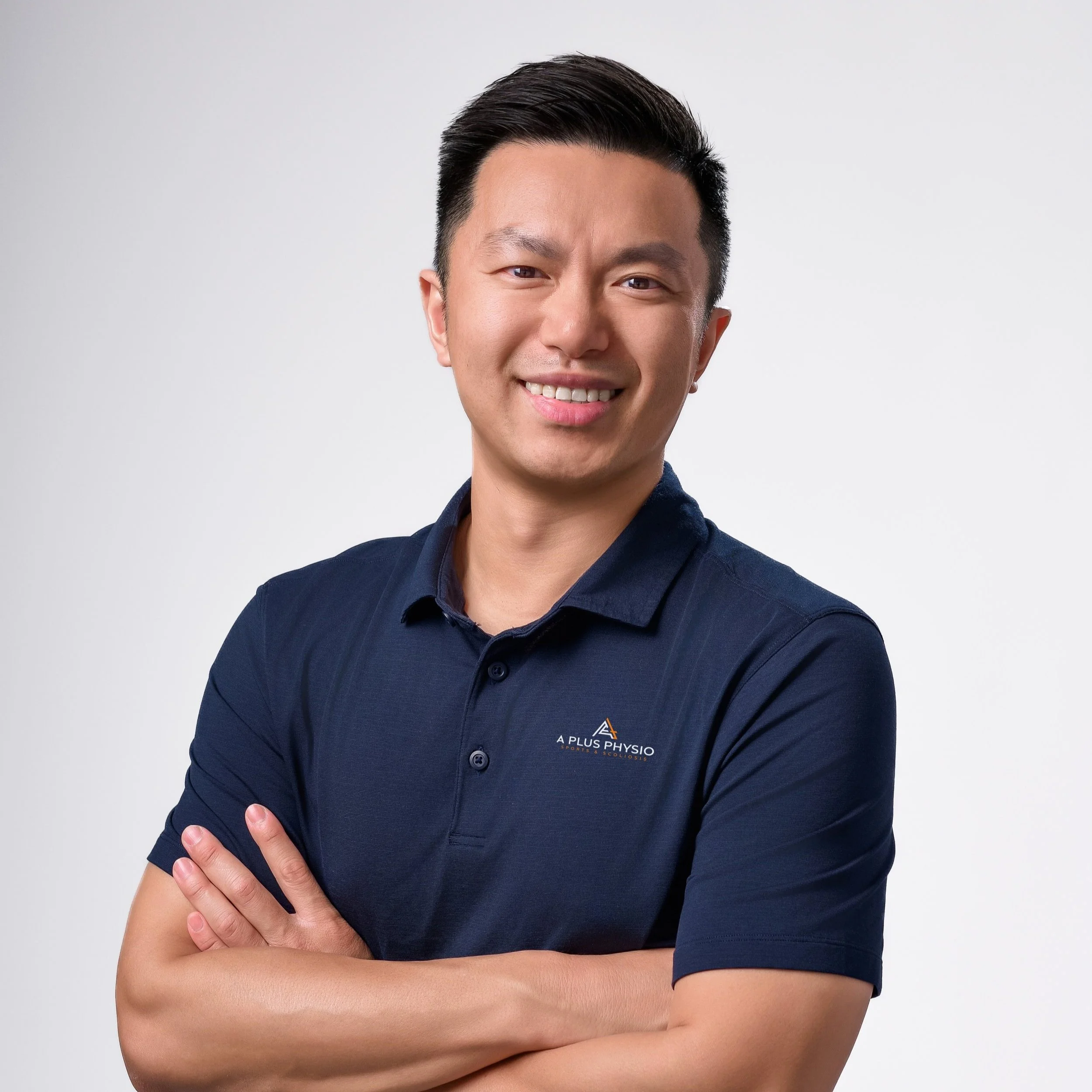
Meet Austin, your Schroth expert.
Austin Tsai is a certified BSPTS practitioner, trained through the Barcelona Scoliosis Physical Therapy School in the Rigo Concept, a Schroth-based approach to scoliosis exercise therapy.
It's not a weekend course. Most physiotherapists in Brisbane don't hold it.
Since 2018, Austin has narrowed his entire practice to spinal disorders, with scoliosis at the centre of it. He's an Associate Lecturer at the University of Queensland, supervising clinical studies for Masters and Bachelor physiotherapy students, and he speaks regularly at international medical conferences and national courses.
So when you come to A Plus, you're not getting a generic core program with a scoliosis label on it. You're being taught by someone who does this every week and has done for years.
Schroth Method FAQ
-
No. You can book directly with us. If you're already under an orthopaedic specialist or GP, bring their notes and imaging along, and we'll work alongside them.
-
It helps a lot. Schroth exercises are prescribed to your curve pattern, and the most accurate way to see that pattern is on film. If you have a recent X-ray or report, bring it. If you don't, come in anyway and we'll assess you and let you know whether imaging is the right next step.
-
Something you can move in, and something that lets us see your back. Shorts and a singlet or sports bra works well. We need to see your spine and ribcage to assess and cue properly.
-
t depends on your curve, your age and how much you're doing at home.
It's not an open-ended weekly appointment forever. The goal is to get you independent with a home program and then review you periodically.
-
No. Schroth is active exercise, not a manual technique, so there's nothing being pushed or forced. The positions can feel unusual and hard work, because you're using muscles in ways you haven't before, but it shouldn't be painful.
-
Scoliosis specific exercise is a recognised conservative treatment approach and it's the most studied of the exercise-based methods. Research suggests it may help slow or halt curve progression, improve posture and reduce pain, and in some cases contribute to a reduction in curve angle.
Outcomes vary considerably depending on age, skeletal maturity, curve size and how consistently the home program is done. We'll give you a realistic picture at your assessment rather than a promise.
-
No. The goal changes, but it doesn't disappear. In growing children and teens, the priority is preventing progression. In adults, the spine is less flexible, so the focus shifts to posture control, managing pain, improving how you move day to day, and holding what you've got.
-
Yes, and the two are designed to work together. Bracing holds the correction passively. Schroth teaches your muscles to do it actively, including learning to breathe correctly inside the brace.
-
Schroth-based exercise can still be useful after spinal fusion, focused on strength, body awareness and how you move around the fused segments. Bring your surgical details and we'll build around them.
-
No. Pilates is a general exercise system built around symmetry and core control, and it can be great alongside scoliosis care. Schroth is scoliosis specific.
The exercises are asymmetrical, prescribed to your individual curve pattern, and built around a breathing technique that doesn't exist in a Pilates class.
-
No. Core strengthening treats your body as symmetrical. Schroth starts from the fact that it isn't.
-
More than you'd like, honestly. The exercises you do in the clinic are the ones you learn. The exercises you do at home are the ones that change things. It's usually a daily program, and how consistently you do it is the single biggest thing that determines your result.
-
Generally, the earlier a curve is picked up and addressed, the more room there is to influence it, particularly through the growth spurt years.